
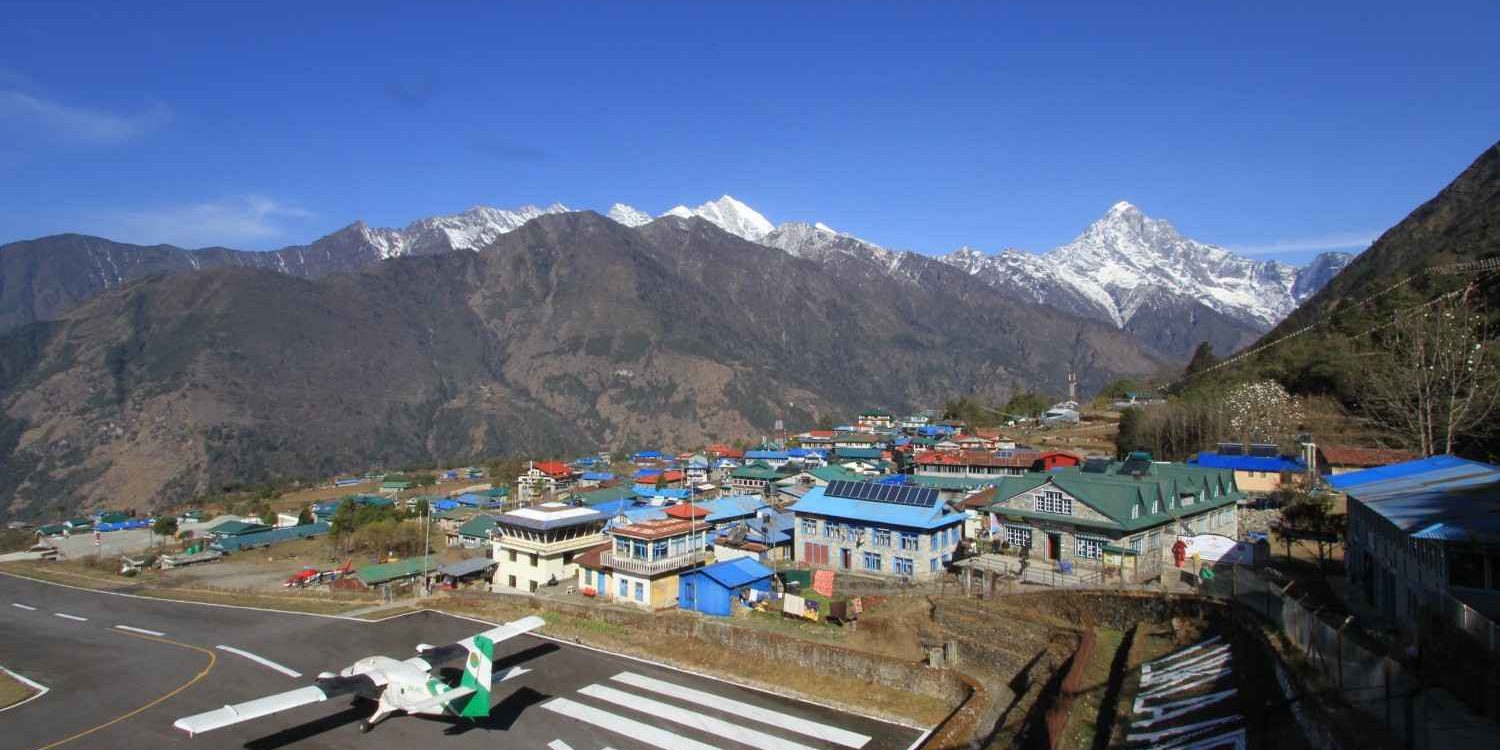
Flying to Lukla is the thrilling start to the Everest Base Camp trek. Learn what the flight is like, why delays happen and how to plan around them.
Table of contents
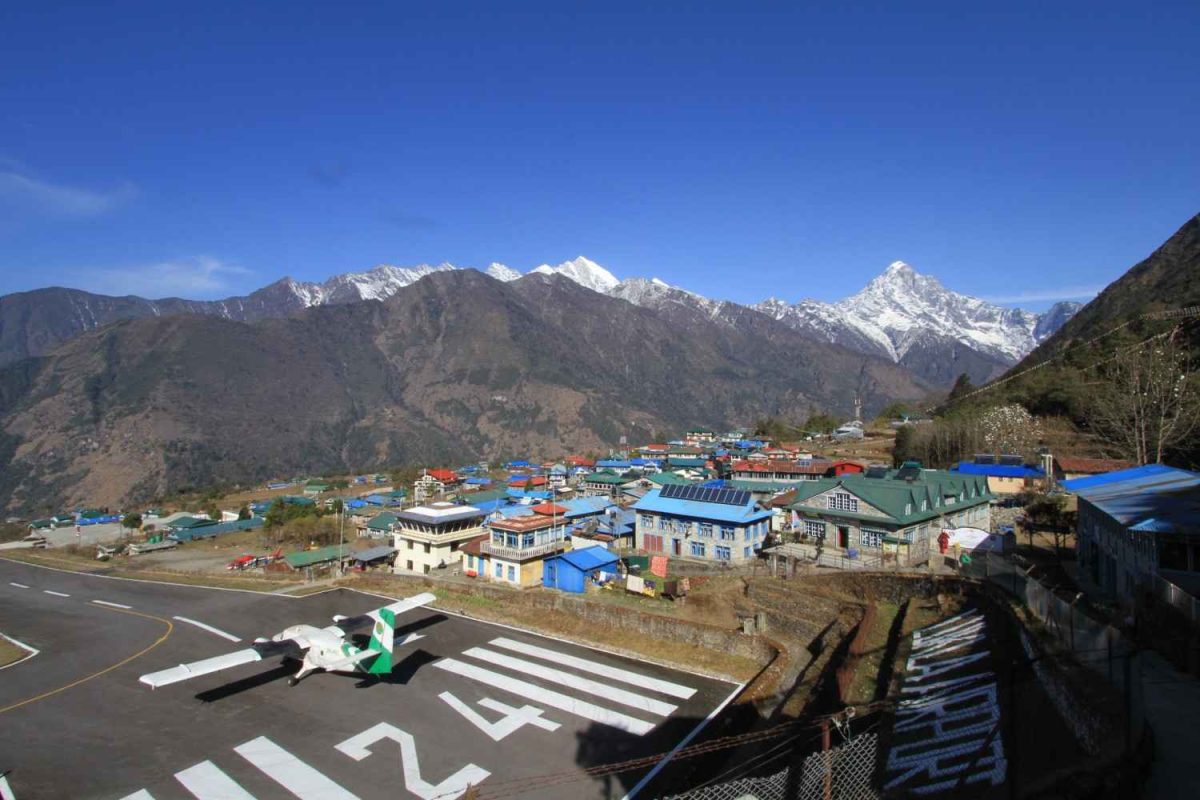
For most trekkers, the Everest Base Camp adventure begins with a short flight to Lukla, a mountain airstrip with a reputation as one of the most dramatic in the world. Here is what to expect and how to plan for it.
What the flight is like
The flight from Kathmandu takes about 30 to 40 minutes in a small twin-engine aircraft that seats fewer than 20 passengers. Sit on the left side on the way up if you can, since the Himalayan ranges are often visible from that side on clear mornings.
Lukla’s Tenzing-Hillary Airport has a very short runway that slopes uphill, with a mountainside at one end and a steep drop at the other. It sounds alarming, but the pilots on this route are highly experienced, and the short, uphill runway actually helps aircraft slow down after landing. Most passengers describe the landing as exciting rather than frightening.
Why flights get delayed
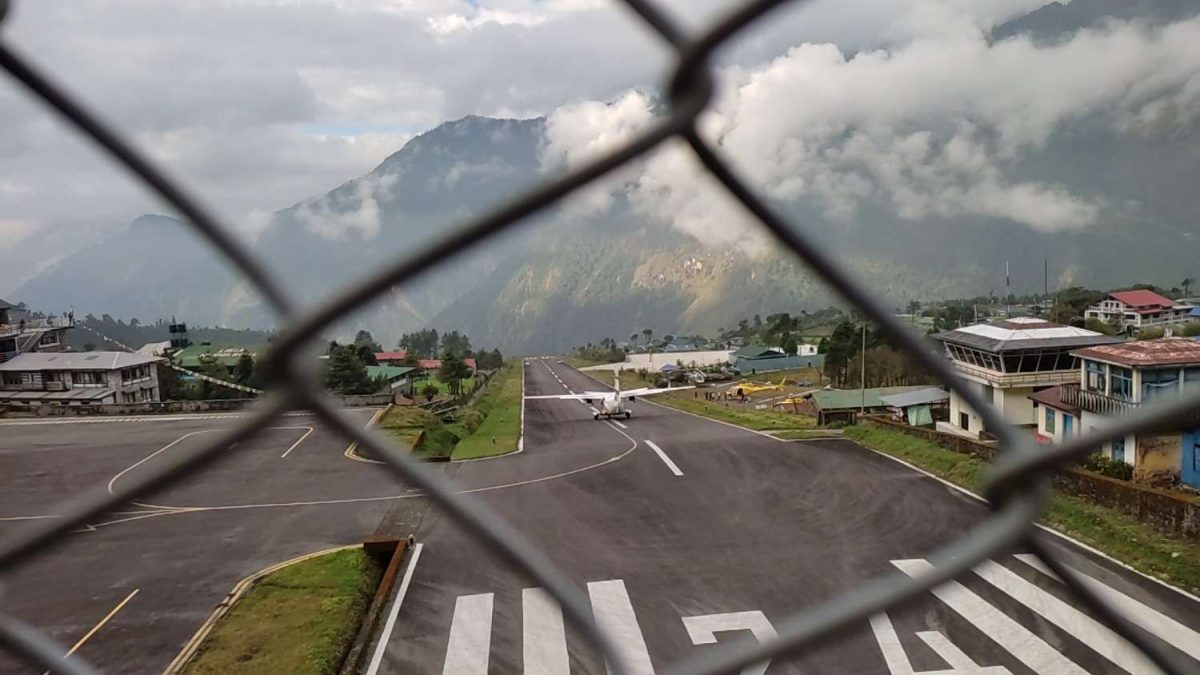
Lukla flights depend on visual conditions. Pilots need clear views of the valley, so low cloud, fog or strong winds can ground flights. Delays are common, especially in the afternoon, when cloud tends to build up. That is why flights operate early in the morning.
Delays can also happen in the peak spring and autumn seasons, when air traffic is heavier. During these periods, some flights may depart from a different airport outside Kathmandu, and your trek operator will tell you if this applies to you.
How to plan around delays
- Add buffer days. Leave at least one or two spare days at the end of your trip before your international flight home. This is the single most useful thing you can do.
- Don’t book tight connections. Avoid scheduling an international flight the day after you are due back from Lukla.
- Be flexible. A delay is part of the trek, not a failure of planning. Weather can change within hours.
- Pack essentials in your daypack. Keep medication, valuables, a warm layer and a charger with you, not in the checked duffel.
- Check your insurance. Make sure it covers flight delays, cancellations and emergency evacuation.
If the flight is cancelled for several days
When weather closes the airstrip for a longer stretch, there are two main options. You can wait, which is the cheapest and simplest, or you can charter a helicopter, which is more expensive and usually shared among a group. Your operator can help you decide based on how many days you have to spare. Helicopters can also reach places where fixed-wing aircraft cannot, so they are often used when a delay stretches on.
Baggage limits
Luggage allowances on Lukla flights are strict because the aircraft are small. Expect a limit of around 15 kg in total, including your daypack. Leave non-essential items at your hotel in Kathmandu, which most hotels will store for free. Confirm the exact limit with your operator before you pack.
A note on safety
Flights are scheduled only when conditions allow, and operators cancel rather than take risks. If the airline or your guide says it is not safe to fly, that is the right call, however frustrating it feels at the time.
Ready for the start of your trek?
The Lukla flight is only the beginning. After landing, you meet your guide and porter and set off on the gentle descent to Phakding, the first night of your journey. If you would like help planning your Everest Base Camp trek, including sensible buffer days, get in touch with the Extra Himalaya team.