

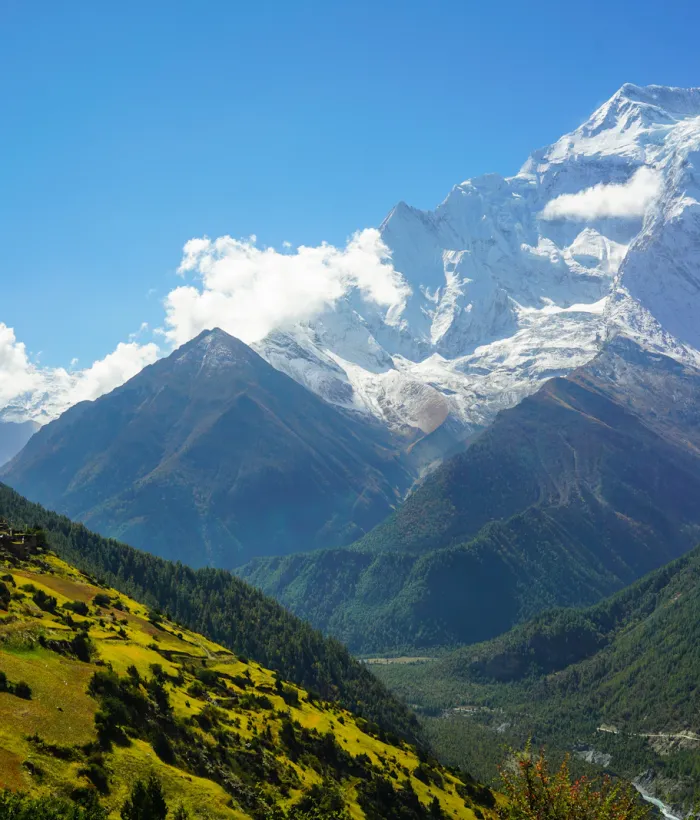
Annapurna Region

- Duration22 days
- Max. altitudeSingu Chuli (Fluted Peak) summit, 6,501 m / 21,329 ft
- GradeVery challenging and technical
- Start / endKathmandu to Kathmandu
- Group size
- Best seasonSpring (March–May) and autumn (September–November)
- AccommodationHotels in Kathmandu and Pokhara, teahouses/lodges on the trek and tents during the climb
- MealsTeahouse meals during the trek and camp meals during the climb
- ActivityTrek and climb
- Transport
Overview
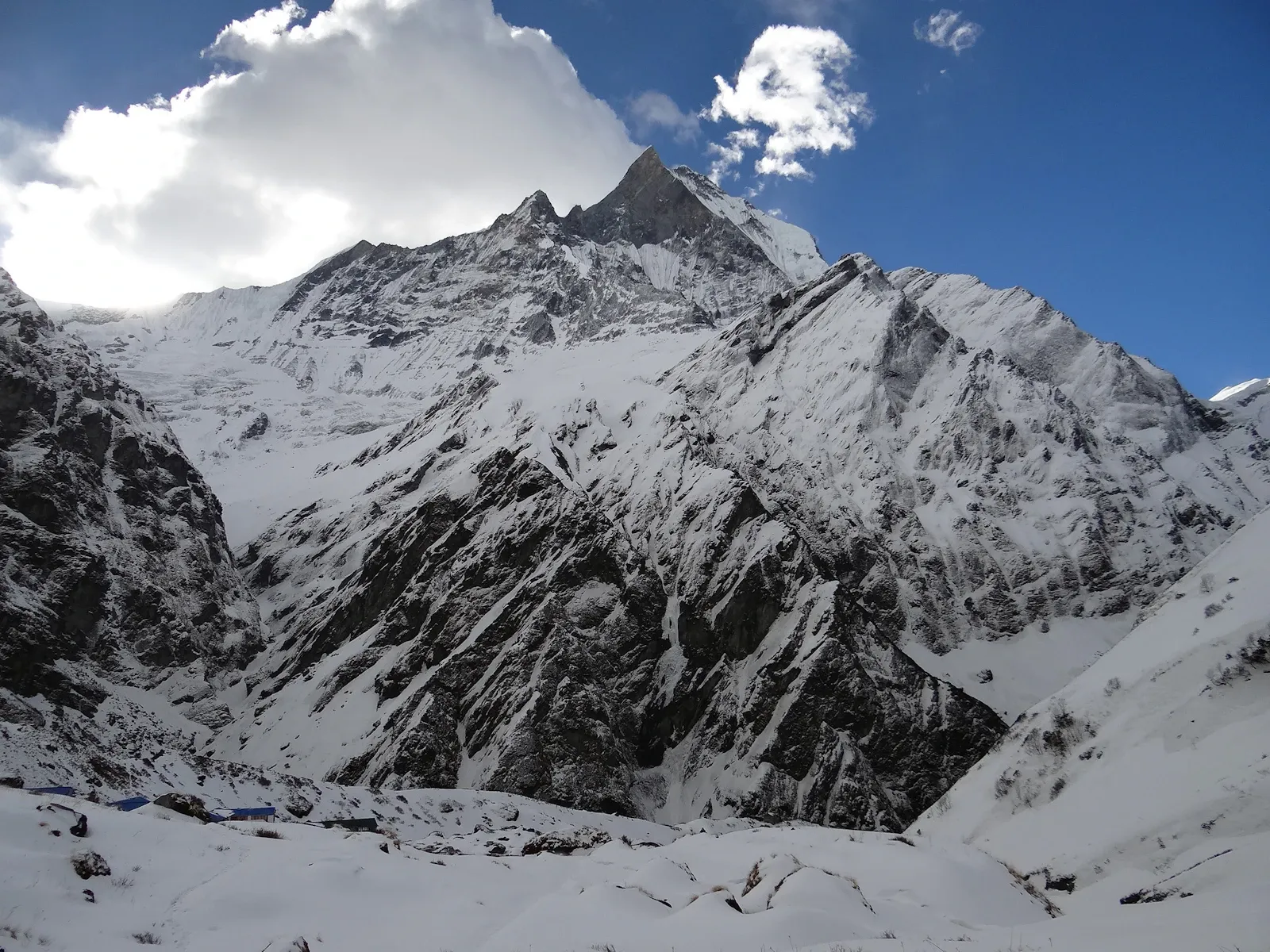
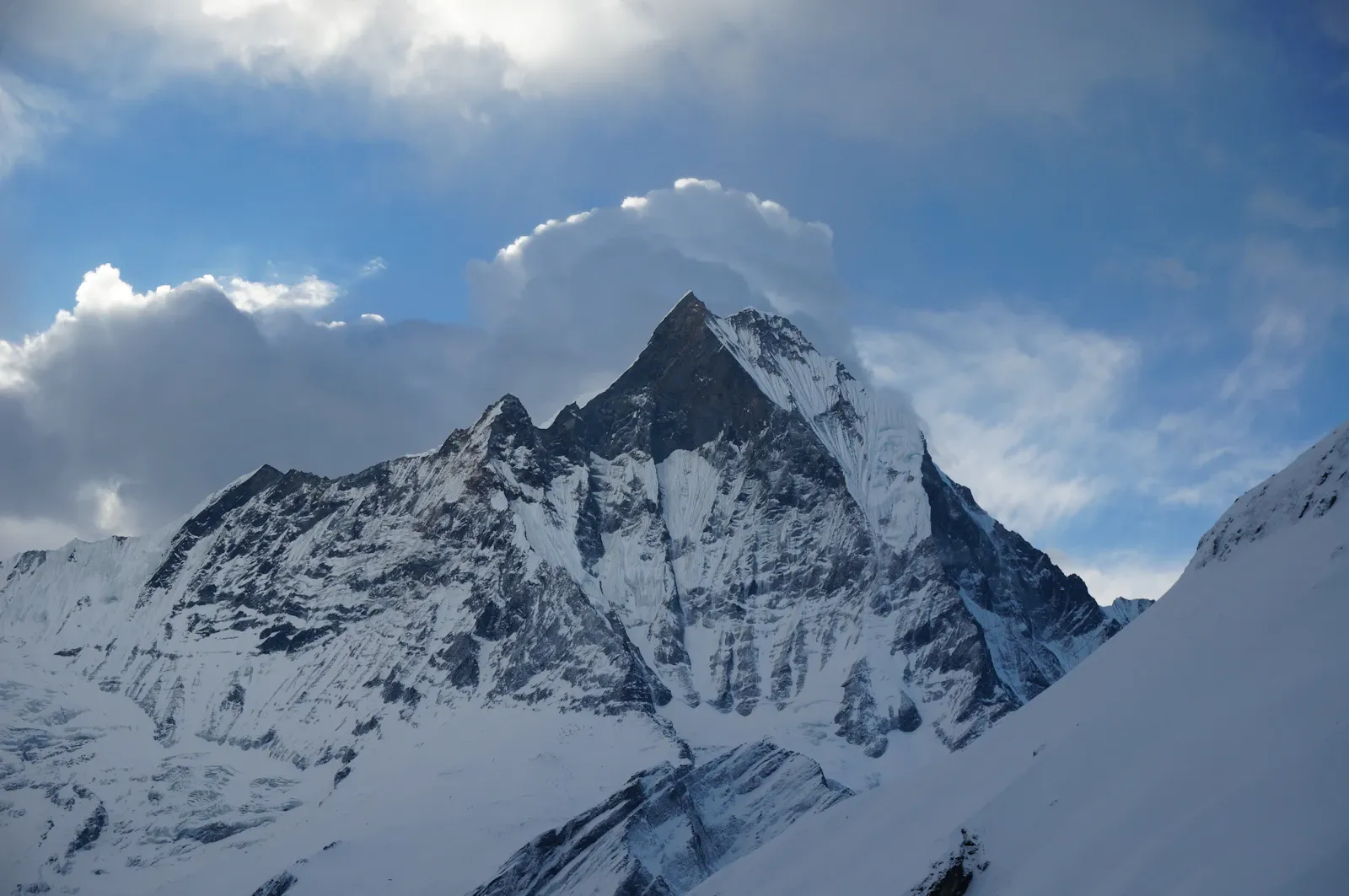
Singu Chuli, also known as Fluted Peak, rises to 6,501 m (21,329 ft) in Nepal's Annapurna region. It lies near Tharpu Chuli and Hiunchuli, surrounded by the other mountains of the Annapurna Sanctuary.
Singu Chuli requires technical mountaineering. The climb involves slippery snow and ice, glacier travel, exposed terrain and technical climbing equipment. Climbers should have previous high-altitude and technical climbing experience, because Singu Chuli is not a simple extension of the Annapurna Base Camp trek.
The route follows the impressive Annapurna Sanctuary trail, passing villages, forests and the Modi Khola Valley before reaching Machhapuchhre Base Camp and Annapurna Base Camp. From the sanctuary, the journey leaves the normal trekking route and heads to Singu Chuli Base Camp and the higher climbing camps.
Route Overview
Kathmandu – Pokhara – Annapurna trekking route – Chhomrong – Bamboo – Deurali – Machhapuchhre Base Camp – Annapurna Base Camp – Singu Chuli Base Camp – High Camp – Singu Chuli Summit – Base Camp – Annapurna Sanctuary – Pokhara – Kathmandu
Approach to the Annapurna Sanctuary
The first part of the journey follows the classic Annapurna trekking route (Pokhara – Ghandruk – Chhomrong – Bamboo – Deurali – Machhapuchhre Base Camp – Annapurna Base Camp), passing lower valleys, rhododendron forests and traditional settlements before entering the narrow Modi Khola Gorge.
The terrain changes as you gain altitude: green forests give way to alpine terrain, rocky slopes and the snow-covered mountains that surround the sanctuary. This section provides useful acclimatization before the technical climb.
Machhapuchhre Base Camp and Annapurna Base Camp
Machhapuchhre Base Camp marks the transition from the trekking section to the high-altitude environment. From here, the trail continues to Annapurna Base Camp (approx. 4,130 m), an important acclimatization stop before heading onto the glacier and toward the Singu Chuli climbing area.
Singu Chuli Base Camp
Once you leave the normal Annapurna Base Camp route, the journey becomes more serious. The approach to Singu Chuli Base Camp involves glacier travel, and the exact Base Camp location (roughly 4,200–4,350 m) depends on current mountain conditions and the chosen climbing route. This is where the trip changes.
Instead of simply trekking, you now prepare for glacier travel, rope work, snow and ice climbing, crampon and ice-axe techniques, fixed-rope sections, high-camp routines and summit-day preparation. Your climbing team checks equipment, assesses everyone's condition and makes sure climbers acclimatize properly.
High Camps
Higher camps are set according to the chosen route, snow and ice conditions, the weather and the guide's instructions, as the route above Base Camp becomes increasingly technical. Camp altitudes vary between route descriptions: some place camps at around 4,900–5,200 m, followed by higher camps at around 5,500–5,800 m.
The Technical Climb
Singu Chuli is not a beginner-friendly climbing peak. The climb can involve:
- Steep snow slopes
- Ice terrain
- Glacier travel
- Rock and mixed terrain
- Fixed ropes
- Exposed sections
- Crevasse hazards
- Unstable snow, depending on route conditions
Some descriptions mention slippery sections and a vertical rock and ice feature on the Northeast Face, while others use a different line.
Summit Day
Summit day is the most challenging part of the journey. The climb normally begins very early, often before dawn, to take advantage of the most stable conditions and the available daylight. From high camp, climbers move through snow, ice and technical sections toward the summit ridge.
The final section demands careful movement, as fatigue, altitude, cold, wind and changing snow conditions make the terrain more challenging. From the 6,501 m summit, you can enjoy panoramic views across the Annapurna range and the surrounding Himalaya before descending.
Never treat the summit as guaranteed: it always depends on the weather, route safety and the physical and mental condition of the climbers.
Descent
Descending from Singu Chuli is just as important as reaching the summit. After the summit, climbers descend through the high camps to Base Camp. The descent can be physically demanding because of fatigue after a long summit day, and deep snow, ice, loose rock and changing surfaces require technical skill and proper technique.
The route then rejoins the Annapurna Sanctuary trail, descending gradually and eventually returning to Pokhara.
Who is Singu Chuli Suitable For?
- Experienced trekkers with previous trekking or climbing experience
- Climbers with knowledge of basic climbing equipment
- Climbers with basic mountaineering skills
- People with experience moving on snow and glacier terrain
- Physically fit climbers who can manage long summit days
- Climbers who follow their guide's instructions
It is not recommended for first-time climbers without climbing experience or appropriate training.
Highlights
- Summit Singu Chuli at 6,501 m
- Climb the peak also known as Fluted Peak
- Located in the heart of the Annapurna Sanctuary
- A technical mountaineering climb
- Glacier and high-altitude terrain
- An impressive approach through the Annapurna Sanctuary
- Views of Annapurna I, Annapurna South, Annapurna III, Hiunchuli, Gangapurna, Machhapuchhre and other Himalayan peaks
- A combination of trekking and climbing
- Less crowded than the popular trekking peaks
- More technical than other popular trekking summits
Altitude profile
Top: Singu Chuli (Fluted Peak) summit, 6,501 m / 21,329 ftHover or tap a day for detailsScroll sideways to see every day
Itinerary at a glance
- Day 1Arrival in Kathmandu
- Day 2Expedition Preparation and Briefing
- Day 3Kathmandu to Pokhara
- Day 4Trek Starts
- Day 5Trek to Chhomrong
- Day 6Chhomrong to Bamboo
- Day 7Bamboo to Deurali
- Day 8Deurali to Machhapuchhre Base Camp
- Day 9Machhapuchhre Base Camp to Annapurna Base Camp
- Day 10Acclimatization and Technical Preparation
- Day 11Annapurna Base Camp to Singu Chuli Base Camp
- Day 12Base Camp to High Camp
- Day 13Acclimatization and Technical Preparation
- Day 14Move to the Higher Climbing Camps
- Day 15Summit Preparation
- Day 16Summit Singu Chuli
- Day 17Descend to Base Camp
- Day 18Back Through the Annapurna Sanctuary
- Day 19Trek to the Lower Valley
- Day 20Return to Pokhara
- Day 21Pokhara to Kathmandu
- Day 22Contingency / Departure
Day-by-day itinerary
Altitudes are the highest point reached that day. Walking times are typical and exclude breaks; your guide adjusts the pace to the group.
Arrive in Kathmandu (approx. 1,350 m) and transfer to your hotel. Rest after your journey and get ready for the expedition.
Today is for expedition preparation. Your climbing team checks your trekking and mountaineering equipment and briefs you on the route, acclimatization plan, safety procedures and climbing programme.
Travel from Kathmandu to Pokhara (approx. 800–900 m), the gateway to the Annapurna region, and prepare for the start of the trek.
The trek begins on the classic Annapurna trekking route, passing lower valleys, rhododendron forests and traditional settlements.
The trail continues through the Annapurna foothills to the Chhomrong area (approx. 2,000 m), a key village on the way into the Annapurna Sanctuary.
From Chhomrong, the route heads deeper into the Modi Khola Valley through forest to Bamboo (approx. 2,300 m).
The trail enters the narrow Modi Khola Gorge and climbs to Deurali (approx. 3,200 m) as the forest gives way to more alpine terrain.
You climb into the Annapurna Sanctuary to Machhapuchhre Base Camp (approx. 3,700 m), where the trekking section meets the high-altitude environment, surrounded by rocky slopes and snow-covered peaks.
The trail continues to Annapurna Base Camp (approx. 4,130 m), an important acclimatization stop before heading onto the glacier and up to the climbing camps.
This day is for acclimatization and technical preparation. Your climbing team checks equipment and practises the essential skills for the climb, such as crampon use, ice-axe handling and rope work.
You leave the normal trekking route and travel over glacier terrain to Singu Chuli Base Camp (roughly 4,200–4,350 m, depending on conditions and the chosen route). From here, the trip becomes a mountaineering expedition.
The team moves up to High Camp. Camp locations depend on the route, snow and ice conditions and the weather; some route descriptions place the first high camp at around 4,900–5,200 m.
Another day to acclimatize at High Camp and continue technical preparation, including fixed-rope practice and movement on snow and ice.
The team moves up to the higher climbing camps (around 5,500–5,800 m in some route descriptions) as the route becomes increasingly technical.
Rest, hydrate and complete final equipment checks. The climbing team reviews the weather, route conditions and summit plan before the early start.
Summit day begins very early, often before dawn. You climb through snow, ice and technical sections toward the summit ridge and, if conditions allow, reach the 6,501 m summit of Singu Chuli with panoramic views across the Annapurna range. You then descend carefully to camp.
Descend through the high camps to Base Camp. Fatigue after the summit day makes careful, controlled movement on snow, ice and loose rock especially important.
Leave the climbing area and rejoin the Annapurna Sanctuary trekking route on your way back down the valley.
Continue down through the Modi Khola Valley to lower elevations, where the air is thicker and the forests return.
Finish the trek and return to Pokhara (approx. 800–900 m) to rest after the expedition.
Travel back from Pokhara to Kathmandu.
This day is kept for contingencies such as weather or route delays, or for your departure from Nepal.
Customize this trip
Every itinerary on this page can be changed. Tell us what you would like and a trip planner will send back a tailored day-by-day plan and price, usually within a few hours.
- Add rest or acclimatisation days
- Upgrade hotels and lodges
- Combine it with another trek, tour or safari
- Travel privately on your own dates
Dates & prices
Departure dates and prices are confirmed on request.
Can't see your date?
Pick any start date in the booking box or send us your plans and we'll confirm availability within a few hours.
Includes & Excludes
Includes
Included in the package
- Accommodation
- Meals
- Support guides
- Permits
- Equipment
- First aid
- Local taxes
Excludes
Not included
- International airfare
- Nepal visa
- Travel insurance
- Personal climbing equipment
- Personal expenses
- Extra accommodation caused by delays
- Emergency evacuation
- Tips
- Personal communication expenses
- Any other services not listed as included
Packing list
A proper equipment list includes both trekking and mountaineering equipment.
Personal Climbing Equipment
- Mountain boots
- Crampons
- Ice axe
- Climbing harness
- Helmet
- Ascender/jumar
- Descender
- Carabiners
- Slings
- Backup cord
- Climbing gloves
- Mountain gloves
- Goggles
- Sunglasses
- Headlamp with spare batteries
Clothing
- Base layers
- Fleece
- Down jacket
- Waterproof shell
- Insulated trousers
- Warm hat
- Balaclava
- Trekking/mountaineering socks
Trekking Equipment
- Backpack
- Sleeping bag suitable for high altitude
- Trekking poles
- Water bottle or hydration system
- Duffel bag
- Headlamp
- First-aid items
- Sunscreen and lip balm
Useful trip information
Spring and autumn are generally the preferred periods for climbing Singu Chuli, although the final climb always depends on the weather and route conditions.
Spring (March–May): Improving weather and route conditions before the monsoon.
Autumn (September–November): Clear weather after the monsoon; one of the best climbing seasons.
Singu Chuli is a technically challenging peak. Approach it seriously; it is not a typical trekking peak. The difficulty comes from the combination of:
- 6,501 m altitude
- Technical snow and ice
- Glacier travel
- Steep climbing sections
- Exposure
- High-altitude camps
- A long summit day
- Rapidly changing weather
- The need for technical equipment
- Physical and mental fatigue
Don't choose this climb if you are new to trekking: it requires previous experience and a basic knowledge of crampons, ice axes, ropes and high-altitude climbing.
Acclimatization is one of the most important parts of the journey. The Annapurna Sanctuary trail involves a gradual change in altitude, but once the climb goes above about 4,000 m, altitude becomes a much bigger concern. The climbing schedule allows enough time for:
- Rest
- Gradual altitude gain
- Adaptation
- Technical training
- Recovery
- Hydration
- Weather assessment
Climbers should understand the signs of AMS and tell their guide immediately if they feel unwell.
Singu Chuli requires careful decision-making throughout the climb. The main risks are:
Altitude: At 6,501 m, much less oxygen is available than at sea level, and AMS and other serious altitude-related illnesses are possible.
Glacier and crevasse hazards: Glacier travel requires proper equipment and an experienced guide, and crevasses may be hidden under snow.
Snow and ice: Conditions change with temperature, recent snowfall, wind, sun exposure and weather.
Route conditions: Conditions vary from season to season; a route that worked before may need to change because of snow, ice or rock conditions.
Descent: Fatigue increases the risk of mistakes on the descent, particularly after a long summit day.
Singu Chuli demands more than ordinary trekking fitness. Be physically and mentally prepared for long walking days, steep ascents, carrying equipment and moving over high-altitude snow and ice.
Physical preparation:
- Cardiovascular training
- Uphill walking
- Stair training
- Leg strength
- Core strength
- Long-distance hiking
Technical preparation:
- Crampon use
- Ice-axe handling
- Rope travel
- Fixed-rope climbing
- Glacier travel
- Movement on snow and ice
Mental preparation:
- Summit attempts can be physically and mentally demanding
- Weather can cause delays
- Climbers may need to turn back because of route conditions
- Following safety measures matters more than reaching the summit
Singu Chuli is an NMA-managed climbing peak, so the climb requires a valid climbing permit along with the required conservation and trekking permits. Exact fees are confirmed based on the climber's nationality, current regulations, the season and the route used.
Kathmandu and Pokhara: hotel.
Trekking section: basic teahouses/lodges along the Annapurna trekking route.
Climbing section: tented camps.
During the trek, local teahouses provide most meals; during the climb, the expedition support team prepares meals at camp.
The final price depends on:
- Group size
- Permit fees
- Guide and climbing support
- Transportation
- Accommodation
- Meals
- Base Camp services
- Equipment
- Porters and support staff
- Insurance and evacuation arrangements
- Any additional requirements
The route to Singu Chuli passes through many settlements and landscapes across the Annapurna region. Responsible climbers should:
- Respect local customs
- Follow teahouse etiquette
- Avoid unnecessary plastic waste
- Use established trails
- Avoid damaging public property
- Respect local settlements
- Minimize waste at high camps
- Follow responsible mountain practices
There is so much to capture, not just the summit. Early-morning mountains, sunrise, prayer flags, small villages, landscapes, teahouses, local people and communities, bridges, weather and everyday moments all make this journey special.
Keeping batteries warm helps in cold conditions. Don't take photos where photography is restricted, and always ask permission before photographing local people or cultural ceremonies, respecting their decision.
As climbing routes depend on conditions, the itinerary may need to be adjusted. The journey can be customized around:
- Acclimatization requirements
- Weather conditions
- Climbing experience
- Route conditions
- Extra days
- Transport arrangements
- Trekking pace
- Personal preferences
Traveller reviews
Read more on Tripadvisor5.00 reviews
Nov 2025
Paced perfectly for the altitude
Our guide checked our oxygen levels every evening and never once rushed us. Standing at base camp after nine days of walking was emotional, and the team made it feel effortless to organise.
Oct 2025
Thorong La at sunrise
We left High Camp at 4 am and topped out on the pass as the sun hit the snow. The teahouses were well chosen, food was hot, and our porter Binod became a friend.
Apr 2026
Small group, big views
Mardi Himal was the perfect short trek for us. Rhododendrons in full bloom, Machhapuchhre right in front of us at high camp, and a guide who knew every village we passed.
Mar 2026
Langtang exceeded every expectation
Close to Kathmandu but it feels remote. Kyanjin Gompa and the climb to Tserko Ri were highlights. Communication before the trip was quick and honest about what to expect.
Frequently asked questions
Singu Chuli, also known as Fluted Peak, is a 6,501 m mountain in the Annapurna region. It lies within the Annapurna Sanctuary, close to Tharpu Chuli and Machhapuchhre, and is known for its fluted appearance and challenging snow, ice and rock terrain.
No. Singu Chuli is a technically demanding 6,501 m peak and is better suited to climbers with previous high-altitude and mountaineering experience.
Singu Chuli stands at 6,501 m (21,329 ft).
Yes, Singu Chuli is commonly known as Fluted Peak.
Yes. High-altitude itineraries can change based on the weather, route conditions, acclimatization needs and safety decisions.
It varies with the route, acclimatization schedule and any extra days you take. This itinerary is about 22 days.
Yes, previous mountaineering experience is strongly recommended. Climbers should know how to use crampons and an ice axe, travel on a rope, ascend fixed ropes and rappel.
The best seasons are generally spring (March–May) and autumn (September–November), which offer better weather and climbing conditions than winter or the monsoon.
You might also like
More trips in the Annapurna Region and similar adventures.
Everest Region
Cho La Pass with Lobuche Peak-Cross High Mountains
Everest Region
Cholatse Peak Climbing
Ready for the Singu Chuli Peak Climbing?
Send us your preferred dates. We'll confirm availability, flights and lodges, and answer any question before you pay a deposit.
from US$0per personBook now